From Park Play to the Podium: The Strategic Blueprint for Your Tournament Debut
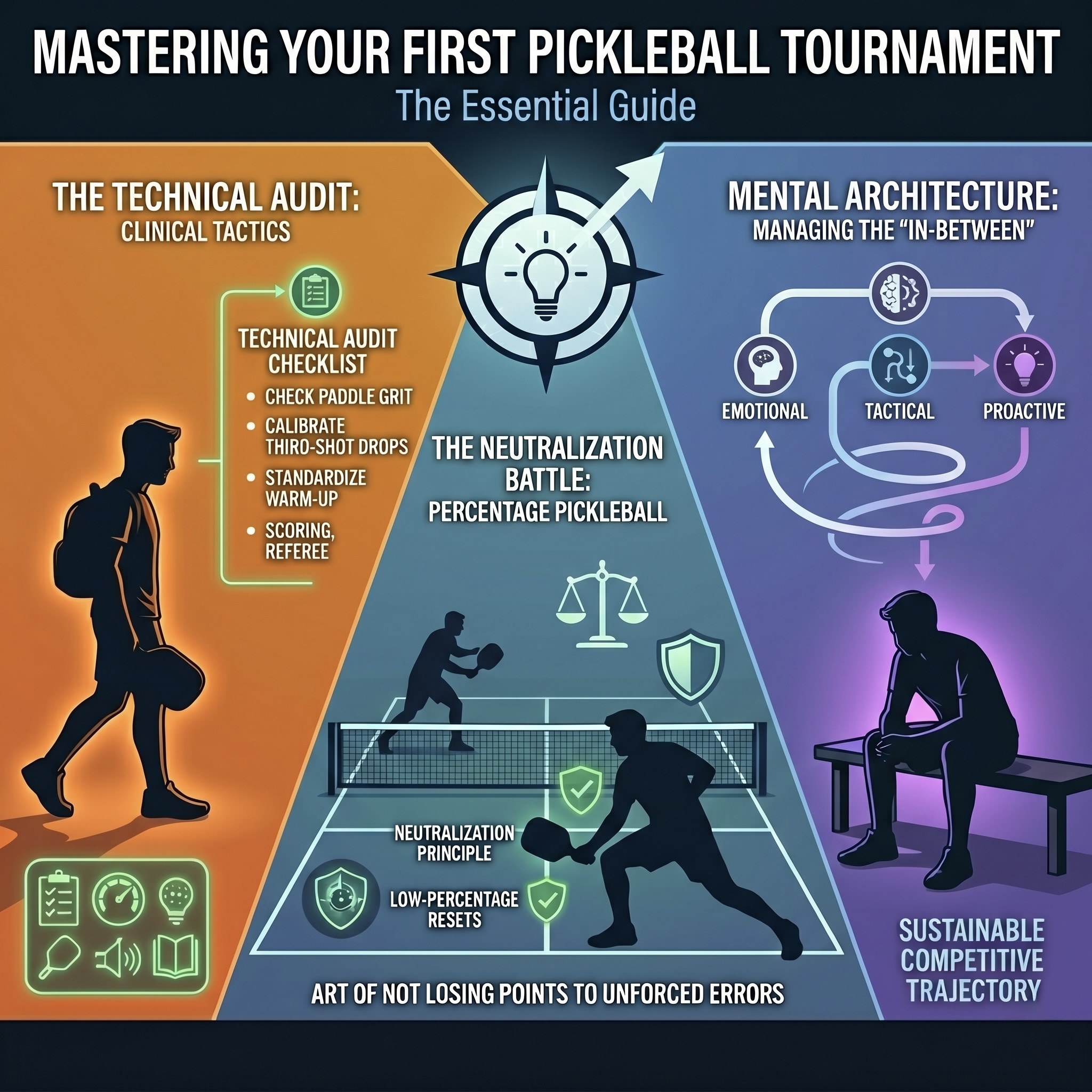
The jump from the local community park to a sanctioned tournament bracket is the most significant psychological hurdle a pickleball player will ever face. That initial walk toward the tournament desk, hearing the rhythmic "pop" of forty simultaneous matches and the drone of the PA system, can turn even a seasoned "rec-play" veteran into a bundle of nerves. This transition is where casual enthusiasts are separated from true competitors. The objective of "Mastering Your First Pickleball Tournament: The Essential Guide" is to replace that debutant anxiety with a clinical, tactical approach to the game. To achieve "mastery" in your first outing, you must stop viewing the tournament as an extension of social play and start treating it as a strategic puzzle to be solved.
The Technical Audit: Beyond the Recreational Routine
The first pillar of tournament mastery involves a rigorous audit of your preparation, moving far beyond the casual "show up and swing" mentality of the park. In a competitive environment, the margin for error evaporates. The "Essential Guide" emphasizes that mastery begins with technical readiness: checking your paddle’s grit for spin consistency, arriving early enough to calibrate your third-shot drops to the specific court surface, and understanding the nuances of tournament-specific scoring and referee interactions.
For the first-timer, this preparation is critical because it eliminates the "noise" of the environment. While casual players focus on the score, the strategist focuses on the variables they can control. By standardizing your warm-up and equipment checks, you ensure that when the first serve is called, your body is on autopilot even if your nerves are firing.
"To achieve mastery in your first pickleball tournament, your preparation must be as disciplined as your kitchen play; the Essential Guide serves as the roadmap to ensure no variable is left to chance."
Winning the Neutralization Battle: Why Consistency Trumps Power
A counter-intuitive strategic insight emphasized for those seeking mastery is the "Neutralization Principle." Many first-time competitors fall into the trap of trying to "win" points with aggressive, low-percentage drives. They treat the tournament as a highlight-reel opportunity. However, the guide identifies that true mastery in a debut event comes from "percentage pickleball"—the art of not losing points to unforced errors.
Mastering the event requires a commitment to the soft game. Instead of engaging in a "firefight" with heavy-hitting "bangers," a prepared strategist focuses on neutralizing power through well-placed dinks and high-percentage resets. This approach is often overlooked by newcomers who assume that tournament play requires more speed; in reality, it requires more patience. By slowing the game down and forcing opponents into the "kitchen," you take control of the court’s geography. This tactical discipline is what separates a participant from a master of the bracket.
The Mental Architecture of Mastery: Managing the ‘In-Between’
Achieving "mastery" in your first outing is as much about what happens between points as what happens during them. The guide highlights the "Mental Architecture" required to handle the unique stresses of a tournament—specifically the long wait times between matches and the pressure of a double-elimination format. True mastery involves maintaining a "neutral-state" mindset, regardless of whether you just executed a perfect overhead or missed a routine serve.
In the long term, this takeaway is the most vital for a player’s growth. Mastery is not a final destination but a repeatable process of emotional regulation and tactical adjustment. When you can stay mentally "in the points" while ignoring the distractions of the neighboring courts and the shifting wind, you have reached a professional level of focus. This mental resilience ensures that a first tournament isn't just a one-off experience, but the beginning of a sustainable competitive trajectory.
Conclusion: Beyond the Final Score
Ultimately, mastering your first tournament is about the shift from reactive play to proactive strategy. It is about honoring the "Essential Guide" by arriving with a plan, executing high-percentage shots, and maintaining your composure when the brackets get tight. The trophy is often won in the weeks of drilling and the hour of pre-match technical audits, not just the final point of the championship match.
As you prepare to step onto the court for your debut, ask yourself: Are you arriving hoping for a win, or have you built the technical and mental infrastructure to demand one?

7 Counter-Intuitive Pickleball Secrets to Level Up Your Game (Without Getting Smashed)


