Why Your Favorite Running Shoes Might Be a Danger on the Court
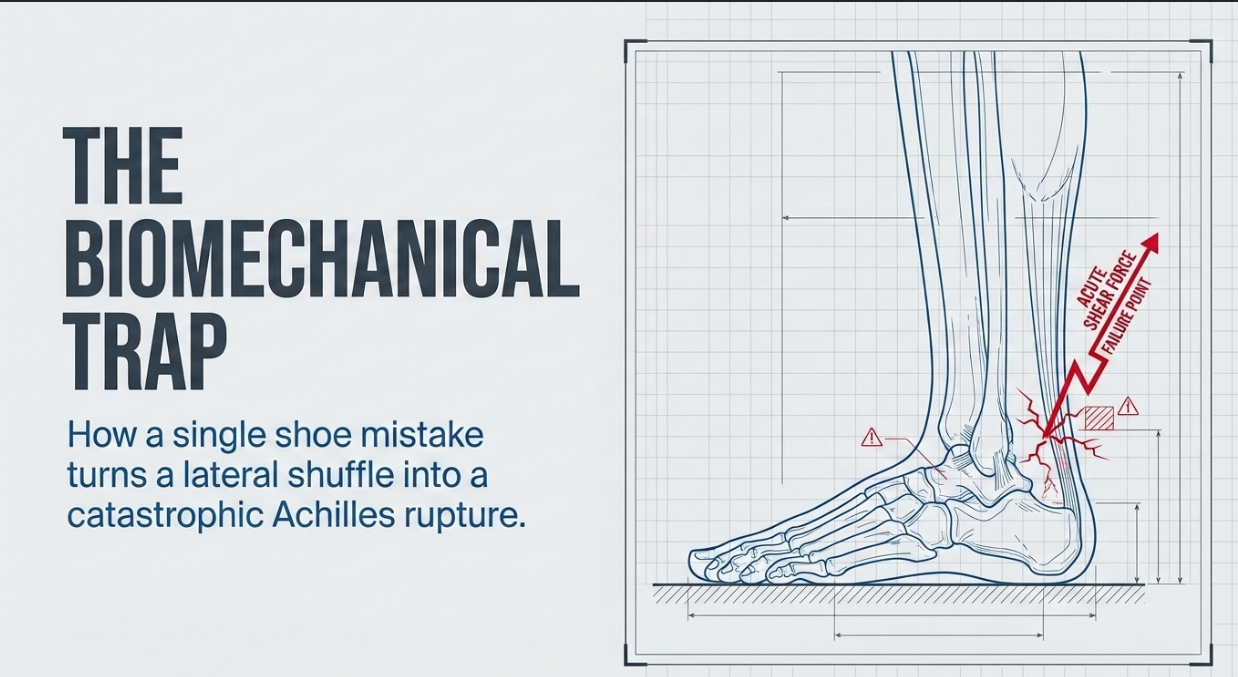
Imagine you are heading to the court for a quick game of tennis, pickleball, or basketball. You grab your most reliable pair of running shoes, assuming their high-end engineering will protect you during any athletic activity. They feel light and supportive on the treadmill, so it seems logical they would perform just as well during a match.
In reality, this common choice represents a critical failure in sports safety. While running shoes are a masterpiece of engineering for their intended environment, using them for court sports creates a hidden "biomechanical trap." What feels like a comfortable footwear choice can quickly transform into a life-altering physical disaster.
Running Shoes Are Masters of Forward Motion
The core design philosophy of a running shoe is extremely narrow. These shoes are built almost exclusively for linear progression—moving in one consistent, straight-ahead direction. Every structural element is focused on supporting the repetitive mechanics of a forward stride, making them elite tools for the track or the trail.
However, this high level of specialization creates a major safety limitation. Because the architecture of the shoe is optimized for a single plane of motion, it lacks the structural integrity required for any activity that moves outside of that front-to-back path. For the athlete, this means the very features that make a shoe great for a 5K run make it a liability on a court.
The Danger of the Lateral Shuffle
The risk escalates the moment an athlete attempts a lateral shuffle. In almost every court sport, quick side-to-side movement is a fundamental requirement. When you force a shoe designed strictly for forward motion into these sharp lateral transitions, you trigger a dangerous mechanical conflict.
The shoe’s structure is meant to grip and propel you forward, but it has no defense against the sideways force of a sudden cut or shuffle. This creates a:
"biomechanical trap that turns a simple lateral shuffle into a catastrophic Achilles rupture."
This "trap" occurs because the shoe cannot stabilize the foot during a sudden shift in direction. Instead of the footwear absorbing the energy of the movement, the mechanical stress is redirected entirely onto your body’s most vulnerable connective tissues. The shoe effectively "catches" while the rest of your lower leg continues to shift, placing the Achilles tendon under impossible strain.
A Catastrophic Achilles Rupture
The ultimate price of this footwear mismatch is a torn or ruptured Achilles tendon. In the field of biomechanics and sports safety, a rupture is classified as "catastrophic" for a reason. This is not a minor sprain that heals with a few days of rest; it is a profound injury that often results in a permanent loss of explosive power and a long, grueling road through rehabilitation.
The impact of an Achilles rupture extends far beyond the court. It compromises your general mobility and can sideline your physical health for months or even years. When you wear a shoe that isn't built for the specific lateral demands of your sport, you are significantly increasing the odds of this high-stakes mechanical failure.
Conclusion: Rethinking Your Footwear Strategy
Running shoes are exceptional tools when used for their intended purpose, but they are not universal athletic gear. Relying on a shoe designed for straight-ahead movement in a high-intensity, side-to-side environment creates a biomechanical trap with potentially devastating results.
Before you step onto the court for your next session, take a serious look at your gear. Is your footwear choice matched to the reality of your movement, or are you accidentally stepping into a trap?

7 Counter-Intuitive Pickleball Secrets to Level Up Your Game (Without Getting Smashed)